
10,000 signatures reached
To: Prime Minister Anthony Albanese and the Australian Labor Government
No Nuclear Weapons in Australia

Australians are being pushed closer to nuclear danger without our knowledge and without our consent.
As global tensions rise and conflict escalates, Australia is being drawn deeper into US military strategy through AUKUS and broader military integration. That means more risk, more secrecy, and a greater chance that nuclear-capable bombers, warships and submarines could operate from, through, or alongside Australian territory.
The United States refuses to confirm or deny whether its vessels and aircraft carry nuclear weapons. Australia accepts that policy. Australians may never know if nuclear weapons are being brought into our country.
This is unacceptable.
If nuclear weapons are brought into Australia, ordinary people would carry the risk while decisions are made behind closed doors. And if Australia is seen as part of a US nuclear war machine, that makes us a target too.
Australians deserve transparency. Australians deserve sovereignty. Australians deserve a say over whether our country is dragged deeper into nuclear risk and great-power conflict.
At a time when wars involving nuclear-armed states are escalating fast, this danger is not abstract. Recent US attacks on Iran, condemned by UN experts as unlawful, are a warning of how quickly conflict can spiral and how easily countries tied tightly to US military strategy can be exposed to the consequences without democratic checks and balances. Australia should be drawing clear red lines on nuclear weapons, not drifting further into secrecy, dependence and danger.
We cannot credibly claim to support a world free of nuclear weapons while accepting ambiguity about their presence in our country.
We cannot claim to support disarmament while leaving the door open to nuclear-capable platforms operating here in silence and without scrutiny.
And we cannot keep asking Australians to carry the risks of decisions we are not even allowed to know about.
The Albanese government needs to draw a clear red line on nuclear weapons now.
We call on you to:
- Sign and ratify the Treaty on the Prohibition of Nuclear Weapons as a matter of urgency, signing in this term of government, comprehensively repudiating nuclear weapons including extended nuclear deterrence, fulfilling Labor’s long-standing policy commitment and aligning Australia with the global majority of nations choosing to reject nuclear weapons.
- Reject nuclear ambiguity and prohibit the entry, transit or presence of nuclear weapons in Australian territory, waters and airspace.
- End all forms of assistance to nuclear weapons activities, including targeting, command, control, planning or enabling operations that support the use or threat of use of nuclear weapons.
When it comes to nuclear weapons, Australians have a right to know.
And we have a right to say No.
Why is this important?
Because Australia is not just debating nuclear weapons in the abstract – it is moving deeper into the practical systems, facilities, and policies that could help enable them.
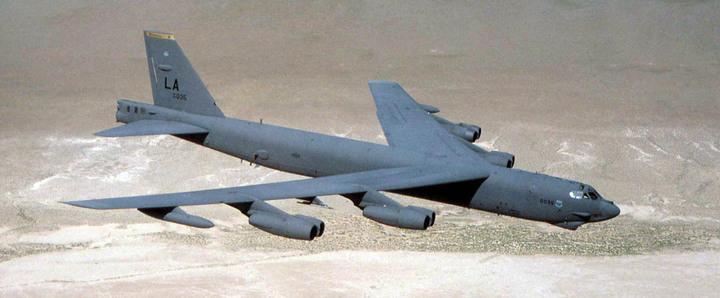
The No Nuclear Weapons in Australia Declaration, backed by more than 150 Australian and Pacific organisations, including GetUp, warns that Australia is on a “current trajectory towards increasing involvement in the command, control, targeting, hosting and possible launch of nuclear weapons from Australia.” It specifically identifies the planned AUKUS hosting of US nuclear-capable B-52 aircraft in the Northern Territory and the planned hosting of US attack submarines which may again become nuclear-capable in coming years.
Australia currently has “no legal ban” on foreign nuclear weapons being brought into Australia – or on being launched from Australia.
The No Nuclear Weapons in Australia Declaration, backed by more than 150 Australian and Pacific organisations, including GetUp, warns that Australia is on a “current trajectory towards increasing involvement in the command, control, targeting, hosting and possible launch of nuclear weapons from Australia.” It specifically identifies the planned AUKUS hosting of US nuclear-capable B-52 aircraft in the Northern Territory and the planned hosting of US attack submarines which may again become nuclear-capable in coming years.
Australia currently has “no legal ban” on foreign nuclear weapons being brought into Australia – or on being launched from Australia.
Current government policy raises further concerns. Australia’s 2024 National Defence Strategy says Australia’s “best protection against the increasing risk of nuclear escalation is US extended nuclear deterrence.” In February 2023, Defence Minister Richard Marles said Australia’s joint and collaborative facilities “support the effectiveness of the extended deterrence commitments the United States provides” and called that a “fundamental contribution” Australia makes to the alliance.
In other words, Australia is not standing outside the US nuclear posture – it is helping sustain it.
In other words, Australia is not standing outside the US nuclear posture – it is helping sustain it.
The risk is becoming more concrete under AUKUS and wider military integration. The Australian Submarine Agency states that from as early as 2027, one UK and up to four US nuclear-powered submarines will have a rotational presence at HMAS Stirling navy base in WA. Separately, the US Air Force says the B-52H Stratofortress “can carry nuclear or precision guided conventional ordnance,” and ABC reported US plans to deploy up to six B-52 bombers to RAAF Tindal.
The secrecy surrounding these plans and postures is deeply worrying.
The US has a “neither confirm nor deny” policy on whether visiting submarines, ships, or planes carry nuclear weapons. In late 2025, Senate estimates heard there was “no impediment” to visits by dual-capable platforms and that Australia would continue to respect that US policy. That means Australians may never know whether nuclear weapons are being brought here.
The US has a “neither confirm nor deny” policy on whether visiting submarines, ships, or planes carry nuclear weapons. In late 2025, Senate estimates heard there was “no impediment” to visits by dual-capable platforms and that Australia would continue to respect that US policy. That means Australians may never know whether nuclear weapons are being brought here.
Labor first committed to signing and ratifying the Treaty on the Prohibition of Nuclear Weapons in 2018, reaffirmed that commitment in 2021 and 2023, but Australia still has not signed. Recent US and Israeli attacks on Iran, condemned by UN experts as unlawful and in violation of the UN Charter, show how quickly conflict can escalate and how easily closely aligned states can be exposed to the consequences without democratic say.
When it comes to nuclear weapons, we have a right to know – and we have a right to say No.
When it comes to nuclear weapons, we have a right to know – and we have a right to say No.