-
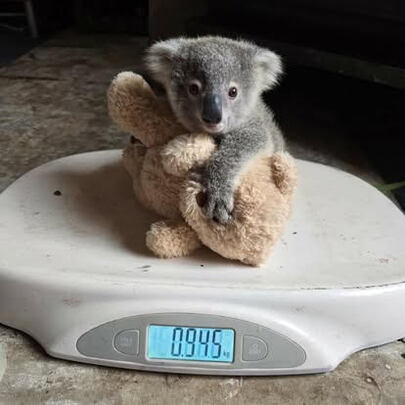 A Great Koala National Park in every koala stateHabitat loss causes major stress for koalas. As a result their immune system is diminished resulting in koalas suffering from anaemia, leukemia-lymphoma, a raft of cancers including bone cancer, metastatic carcinoma, blood and mammary cancers. They suffer from acute respiratory illness, impaired lung function, twisting of the intestine causing anorexia, lethargy, abdominal distension and death. Sarcoptic mange, causing intense itching, skin lesions, chlamydia which causes infertility, wet bottom, eye diseases, blindness and incredible pain. All of this is preventable if we take seriously the task of ensuring koalas have a safe and sustainable natural habitat to live and thrive in. If we can demonstrate to the government that millions of us want a fair go for Koalas, the government will have to act. Communities fighting to protect the koala are demonstrating the true Aussie spirit. When we stand together to protect nature, we're safeguarding our own life support system. And strengthening public citizens' rights to protect nature is strengthening our democracy. When it comes to the koalas, we the people should have the final say, not absent governments or greedy corporations.966 of 10,000 SignaturesCreated by Sue Arnold
 -
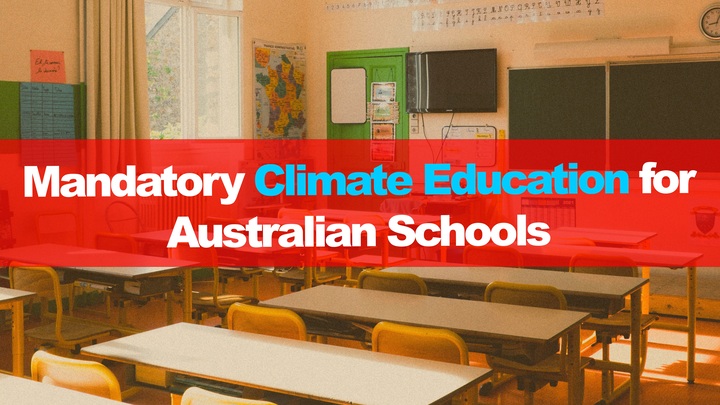 Climate Education in AustraliaGrowing up, I did not receive any formal climate change education. As a consequence, I experienced feelings of hopelessness, eco-anxiety, and disconnection from broader society (the lack of formal education made me believe that almost all people were apathetic towards climate change). This experience prompted self-education on climate change, and this was life changing. I gained the confidence, skills and knowledge to live responsibly in a world suffering from the worsening impacts of climate change, and, importantly, I found hope, alleviated my anxiety, and made connections with like-minded people. I believe that many young Australians silently suffer from eco-anxiety and hopelessness. It is scary to feel like a young and powerless bystander watching as world you're inheriting burns around you. I believe that education is critical for addressing climate change. It allows young people to make informed and responsible decisions, empowers them to take action, alleviates eco-anxiety, and prepares them for life as responsible global citizens.20 of 100 SignaturesCreated by Sam H
 -
Data centres destroy while profits enrich tech giants. Say NO.The building of data centres have negative impacts on our fragile environment, our precious water supplies and our communities. Their perceived benefits are negligible.10 of 100 SignaturesCreated by Jenny Shipley
-
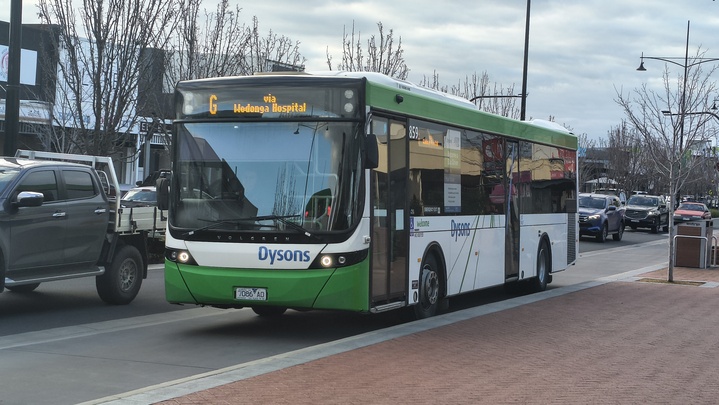 Fix Albury/Wodonga's Public TransportAlbury/Wodonga's Bus network does not do enough to adequately service the community because many newer parts of Albury/Wodonga (such as Killara, Leneva, Parts of Baranduda and Thurgoona) as well as many surrounding satelite towns (Such as Tangambalanga and Tallangatta) do not have adequate access to Public Transport. The Bus network also does not do enough to adequately service the community because most services, Particularly those in Wodonga start too late and Finish too early for most residents, where most services start at 7am and finish at 6pm. Many services (Such as the Routes F, G and O) mostly only operate once an hour while others (Like the E, S and T) have inconsistent frequencies. Most Routes (Like the G, M and O) are difficult to read on a map and take long detours before reaching their destinations. Many Bus stops around Albury/Wodonga are also not wheelchair accessible Many people who use Albury/Wodonga's Bus Network from my observations of using the service for several years in Albury/Wodonga are usually those who often can't or do not use a car (Such as Youth, Older residents and people with disabilities.) Public Transport to the Surrounding satelite Towns is extremely limited with very few methods that exist that don't require a car. Outdated payment methods (such as Wodonga's Buses being Cash only) are also a major barrier as most people no longer carry cash with them. I believe that based on the facts available, The Bus networks in Albury/Wodonga (and especially Wodonga) do not do enough to adequately serve the community. Here are a few scenarios Imagine if you are a 14-year-old teenager in Killara who wants to go out and spend time with their mates on weekends or after school, but their Parent doesn't want to or cannot drive them all the time. It's too dangerous to use a bike because of the highway, It's too expensive to use a Taxi, how will you be able to see your friends without a method of transport that is cheap and predictable? Or if you are a 16-year-old Teenager living in West Wodonga who works at the Woolworths in White Box Rise. their boss would like them to be available to work on Sundays, but no public Transport services operate in Wodonga on Sundays, which impacts their ability to work, their parents cannot always drive them to work because they are too tired from working the week and they cannot afford a taxi. how can they get to work? Or if you are a 40-year-old guy in Tangambalanga who works in Albury and his only way of getting to Albury is to drive. His doctor tells him he cannot drive for a while because of a medical condition that may impact his ability to drive safely. He cannot ride a bike because the highway is too dangerous for him to ride on. How will he be able to get to work? Or if you're a 25-year-old Mum with a toddler who lives in Baranduda and works in Albury who suddenly has to have to get their car repaired because of mechanical issues, they fortunately have access to a Bus service, but that service is limited, which severely restricts her ability to work. All her friends and relatives do not have time to help her out and she doesn't have a way to get her toddler to preschool in West Wodonga. Or if you are an 85-year-old retired grandpa who lives in West Albury whose doctor tells him he is no longer fit to drive because of a medical condition impacting his ability to drive safely, he fortunately has access to a Bus service that operates every hour, however he cannot use the service because he cannot step onto the Bus because the Bus stop infrastructure isn't accessible. Or if you're a 40-year-old woman in a wheelchair living in Wodonga whose nearest Bus stop is only accessible when it is dry, her wheelchair cannot travel on grass when the grass is wet. she works in Albury and works five days a week, wet weather impacts her ability to work because her wheelchair cannot travel on wet grass at her Bus stop All these scenarios are based on very real situations that I have personally been in or know of people who have been in a situation like this. I know that some efforts have been made to fix Albury/Wodonga's network in recent years, such as Cheaper Fares, Cashless payments and upgrading Albury's Network and there are plans to expand cashless payments to the rest of Victoria in 2027, however, there is still lots of work that needs to be done and there are still places in Albury/Wodonga without access to Public Transport. I call on whoever wins the local electorates of Benambra and Albury in the upcoming State elections to be active in advocating for Better Public Transport services in our communities. Goverments have the authority to ensure that parts of taxpayers money can only be spent on certain projects. I'd like to see whoever wins government exercise these powers by putting binding terms in contracts.5 of 100 SignaturesCreated by Anthony Martinelli-Walsh
 -
Stop Food Fraud: A National Regulator for AustraliaAustralia urgently requires an equivalent independent federal regulator to protect its citizens, secure national biosecurity, and restore trust in our food system. Help us push for legislation to establish a dedicated, independent National Food Fraud Regulator with the federal authority and funding to: • Conduct mandatory, proactive random testing on imported and domestic food supplies. • Investigate and criminally prosecute companies, syndicated and individuals involved in food adulteration and labeling deception, including the sale of such items. • Coordinate a centralised national intelligence network to trace and eliminate food fraud across all states and territories.6 of 100 SignaturesCreated by Alice Zhang
-
Demand For A Moratorium On All AI Data CentresWhilst people who might be more active on this front have been distracted by events overseas, the AI industry has crept up on us. We are aware that there will be serious impact on employment, especially at entry level, and there is potential for enormous disruption across our society, for which we are singularly unprepared. We rely on our governments to regulate such industries in our interests, but it’s becoming apparent that government has also been caught unprepared. This is why a Federal government declared Moratorium on all development is now essential. And we need people better informed and prepared to work harder in the public interests than those currently vetting its development.65 of 100 SignaturesCreated by Teri Merlyn
-
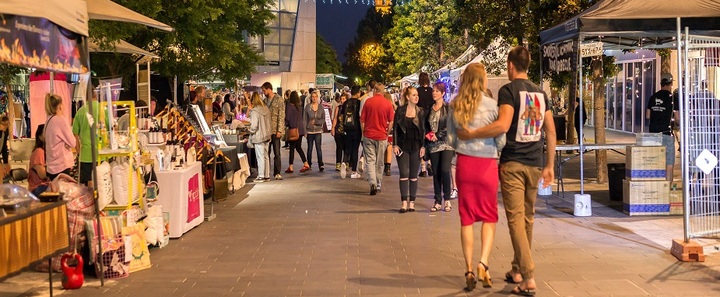 Keep the bendigo mall roadlessWe're losing one of the very few and far areas in bendigo where people are able to sit down and relax, enjoy a meal whilst their children are entertained by the play ground and live music that takes place every thursday. The monthly night markets will be stopped and people won't be able to share their passions and interests with others, so many small businesses effected by the lack of throught behind this action.3 of 100 SignaturesCreated by C D
 -
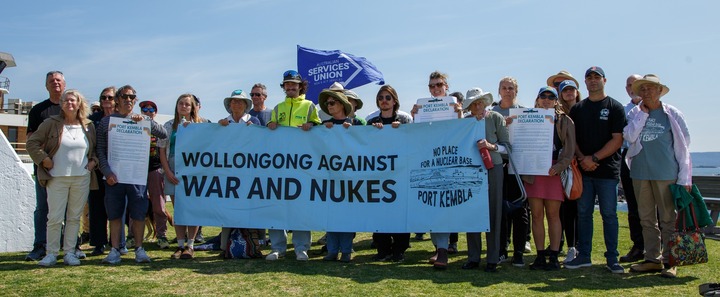 Rule it out: no nuclear submarine base in Port Kembla!We, the undersigned, demand that Prime Minister Anthony Albanese and NSW Premier Chris Minns publicly rule out the construction of a nuclear submarine base in Port Kembla. Secret government documents – only released after a freedom of information fight – confirm Port Kembla is the government's preferred east coast base site. Both federal and state government representatives have refused to rule it out. Delaying a formal decision is an attempt to evade accountability while locking in the plan. Government documents show that an accident at a submarine base in Port Kembla's outer harbour would require immediate evacuation within at least 600 metres and further evacuations up to 1.4 kilometres downwind – covering almost every residential street in the suburb, including local schools and health facilities. Our community has never been consulted about this risk. We also oppose any move to designate the base "Critical State Significant Infrastructure" – a classification that would strip Illawarra residents of their legal right to challenge the decision in court. The billions proposed for this base should instead be invested in what our community actually needs: health, housing, clean energy, education, and environmental repair. We stand with WAWAN, the South Coast Labour Council, ICAN Australia, and the forty organisations of the Port Kembla Declaration. Rule it out. Not here, not anywhere.2,010 of 10,000 SignaturesCreated by Mel B
 -
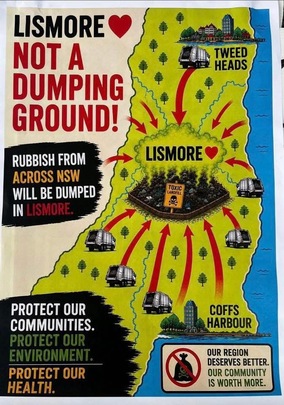 No to the Nationals' Toxic Waste Dump in BlakebrookIf we don't do something now we will have an environmental disaster on our hands and an ongoing much greater need for funds for disaster recovery from Australian Federal and State coffers.528 of 600 SignaturesCreated by Mathew Wilson
 -
 Gold Heart medalThe world needs to promote goodness not badness.4 of 100 SignaturesCreated by Nicky Barry
 -
 No Nuclear Weapons in AustraliaBecause Australia is not just debating nuclear weapons in the abstract – it is moving deeper into the practical systems, facilities, and policies that could help enable them. The No Nuclear Weapons in Australia Declaration, backed by more than 150 Australian and Pacific organisations, including GetUp, warns that Australia is on a “current trajectory towards increasing involvement in the command, control, targeting, hosting and possible launch of nuclear weapons from Australia.” It specifically identifies the planned AUKUS hosting of US nuclear-capable B-52 aircraft in the Northern Territory and the planned hosting of US attack submarines which may again become nuclear-capable in coming years. Australia currently has “no legal ban” on foreign nuclear weapons being brought into Australia – or on being launched from Australia. Current government policy raises further concerns. Australia’s 2024 National Defence Strategy says Australia’s “best protection against the increasing risk of nuclear escalation is US extended nuclear deterrence.” In February 2023, Defence Minister Richard Marles said Australia’s joint and collaborative facilities “support the effectiveness of the extended deterrence commitments the United States provides” and called that a “fundamental contribution” Australia makes to the alliance. In other words, Australia is not standing outside the US nuclear posture – it is helping sustain it. The risk is becoming more concrete under AUKUS and wider military integration. The Australian Submarine Agency states that from as early as 2027, one UK and up to four US nuclear-powered submarines will have a rotational presence at HMAS Stirling navy base in WA. Separately, the US Air Force says the B-52H Stratofortress “can carry nuclear or precision guided conventional ordnance,” and ABC reported US plans to deploy up to six B-52 bombers to RAAF Tindal. The secrecy surrounding these plans and postures is deeply worrying. The US has a “neither confirm nor deny” policy on whether visiting submarines, ships, or planes carry nuclear weapons. In late 2025, Senate estimates heard there was “no impediment” to visits by dual-capable platforms and that Australia would continue to respect that US policy. That means Australians may never know whether nuclear weapons are being brought here. Labor first committed to signing and ratifying the Treaty on the Prohibition of Nuclear Weapons in 2018, reaffirmed that commitment in 2021 and 2023, but Australia still has not signed. Recent US and Israeli attacks on Iran, condemned by UN experts as unlawful and in violation of the UN Charter, show how quickly conflict can escalate and how easily closely aligned states can be exposed to the consequences without democratic say. When it comes to nuclear weapons, we have a right to know – and we have a right to say No.10,699 of 15,000 Signatures
 -
 Solar and batteries for every school and childcare centre!Across Australia, children are learning in classrooms that are getting hotter every year. At the same time, schools and childcare centres are facing rising electricity bills that put pressure on already stretched budgets. Solar panels and batteries offer a practical solution. Installing solar on schools and early learning centres would cut energy costs, freeing up funds for learning materials and student support. Batteries would allow schools to store energy and keep buildings powered during heatwaves, blackouts or other disruptions – helping protect students and staff when the grid is under pressure. Schools exist in almost every suburb, town and regional community. Solar installations on these buildings would create a nationwide network of local clean energy – strengthening communities and reducing pollution. There’s also a powerful learning opportunity. When solar panels and batteries are installed at schools, students can see renewable energy in action every day. It turns climate and energy education into something practical and real. Australia has the sunshine, the technology and the expertise to make this happen. With national leadership and coordinated investment, solar and batteries could be installed on thousands of schools and childcare centres across the country – delivering lower costs, cleaner energy and safer learning environments for millions of children. It’s time to Solar Our Learning. Every school and childcare centre deserves safe, resilient energy – and every community can benefit from local clean power. Solar and batteries on schools mean lower costs for education, safer classrooms during heatwaves, and a practical climate solution that helps the next generation learn and thrive. Add your name and call on the Australian Government to invest in solar and battery systems for every school and childcare centre across Australia!8,325 of 9,000 SignaturesCreated by Nic Seton