-
No Retirement in Warfare: Divest NowJoin me to help pressure our super fund to do better. This is an arena where we actually have the power to create change and demand ethical investment of our money. Are you happy with your money being invested in war and destruction?4 of 100 SignaturesCreated by Shannon Leard
-
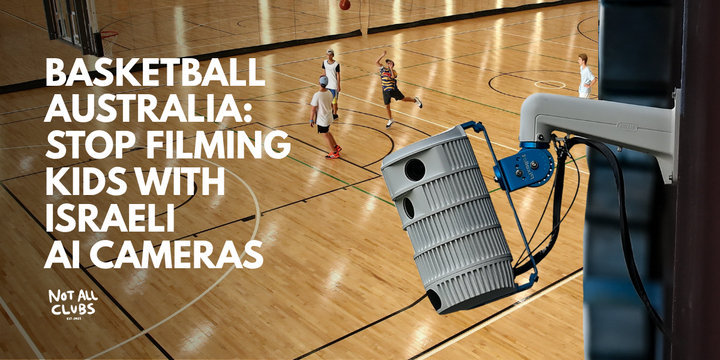 Basketball Australia: stop filming kids with Israeli AI camerasChildren’s safety and consent Kids as young as six will be filmed every time they step on court.[1][4] Basketball Australia’s own Child Safeguarding Policy says children can only be filmed with a parent’s “prior written approval”.[2] HoopsTV does the opposite. Games are filmed unless families opt out, and the footage goes straight to Pixellot. Cost and access And players could end up paying for it. Pixellot promised associations “zero upfront investment”.[3] But in Ballarat, players say they’re being charged “a new mandatory fee within their registration… to cover the cost of the Israeli AI system.”[4] Community basketball should be cheap enough for any kid to play, not another revenue stream for a tech company. Family violence In Ballarat, a woman protected by a family violence intervention order was allegedly contacted by the man named in it after her game was livestreamed on Pixellot cameras. A second woman was contacted by an estranged family member she’d been avoiding. Their coach says the association was warned a week before the game that streaming it could put the women in danger. When the team reported what happened, Ballarat Basketball said the association “does not have the level of administrative access within the platform to independently hide or block games”, and that requests like this have to go through Pixellot.[4] Privacy Basketball Australia says players will be able to opt out of being filmed.[5] But Pixellot’s current Australian privacy policy says opting out only stops footage being broadcast, and “this footage will still be held and used by us”. Pixellot keeps personal information “for as long as necessary” and deletes it “at our sole discretion”, with footage kept for whatever period Pixellot agrees with their customer.[6] Pixellot stores footage in Australia by default, but their policy says personal information may be sent to Israel and the U.S. for things like disaster recovery and processing, where Australian families have far less control over it.[6] Military links and human rights According to Sports Business Journal, Pixellot co-founder Miky Tamir was head of electro-optics at Elbit Systems, where his specialty was tracking objects such as missiles.[7] Elbit is the main supplier of the Israeli military’s drones and land-based equipment.[8] Co-founder and chief technology officer Gal Oz served in “an elite R&D unit in the Intelligence Corps of the IDF”.[9] Now their cameras are on our kids’ courts. Sources [1] Ballarat Basketball, Domestic Basketball [2] Basketball Australia, Child Safeguarding Policy v2.1, August 2024, cl. 13.2.7 [3] Pixellot, Basketball Australia [4] Deepcut News, Israeli AI streamed a Ballarat basketball game, 5 October 2026 [5] Basketball Australia, Basketball Australia and Pixellot partner to launch HoopsTV nationwide, 13 October 2026 [6] Pixellot, Australian Privacy Policy [7] Sports Business Journal, 28 March 2022 [8] Wikipedia, Elbit Systems [9] Pixellot, Our Team11,200 of 15,000 SignaturesCreated by Not All Clubs
-
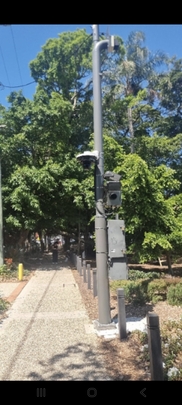 Remove Cameras in Neighbourhoods1.Surveillance overreach: The Information Privacy Act 2009 (Qtd) requires collection to be minimal and for a lawful, documented purpose. No evidence of high crime or safety risk for this specific location has been provided. 2. Audio recording: Audio surveillance in public is highly intrusive and subject to strict legal limits under the Invasion of I Privacy Act 1971 (Qld). 3. Lack of transparency: No information has been provided on retention period, who can access footage, whether facial recognition/ Al is used, or how residents can request access / deletion.35 of 100 SignaturesCreated by Sarah Hayes
-
ONE DAY WITHOUT MIGRANTS-AUS🇦🇺Why One Day Without Migrants Matters 🇦🇺 Behind every migrant is a story of sacrifice, courage, hard work and hope. Many of us left our families, friends and everything familiar behind to build a better future in Australia. We came here to study, work, contribute to society and become part of a country known for fairness, opportunity and multiculturalism. We work long hours, pay taxes, follow the law, support local businesses and contribute to the communities we call home. Yet behind these contributions, many migrants are struggling silently. Some face uncertainty about their visas and futures. Others experience discrimination, negative stereotypes, workplace exploitation and the emotional pressure of feeling unwelcome in a country they have worked so hard to contribute to. We are not just visa numbers, statistics or temporary workers. We are human beings. We are parents, children, partners, students, professionals, tradespeople and essential workers. We have dreams, responsibilities and families who depend on us. Australia is our home, whether we are here temporarily or permanently. This campaign matters because migrants deserve to have their experiences heard and their contributions recognised. One Day Without Migrants is a peaceful call for awareness, unity and mutual respect. It is not about blaming Australians or creating division. It is about encouraging everyone to reflect on the value of migrants in our workplaces, communities and everyday lives. We believe that a stronger Australia is one where people are treated with dignity, regardless of where they were born or what visa they hold. Our message is simple: We are not against Australia. We are part of Australia. We do not want division. We want understanding. We do not want special treatment. We want a fair go. By supporting this petition, people from all backgrounds can help encourage constructive conversations, fairer treatment and meaningful recognition of migrant communities. Let this be a movement built on peace, dignity, compassion and solidarity. ONE DAY WITHOUT MIGRANTS. ONE VOICE FOR FAIRNESS. ONE AUSTRALIA FOR EVERYONE. 🇦🇺6 of 100 SignaturesCreated by Abhinav Khullar
-
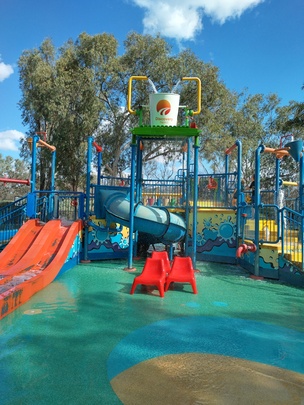 Save Renmark Caravan Park's BIG BucketTo keep the iconic Big Bucket at Renmark Caravan Park. Keep the fun for generations of kids and families. We all need it in this day and age.12 of 100 SignaturesCreated by Joe Cox
-
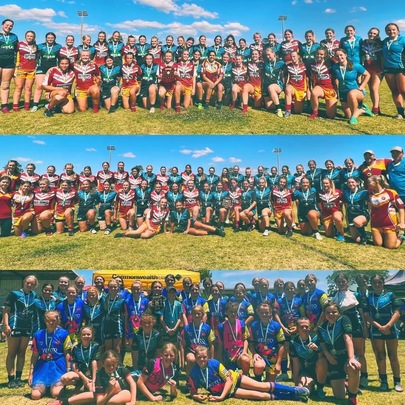 Save the Western Women’s League Spring Competition (WWRL)For girls and women in Western NSW, playing rugby league is not always as simple as joining a team in the next suburb. Distance and smaller populations mean communities do not always have the numbers to create strong, sustainable competitions on their own. The WWRL gives those players another opportunity to take the field, compete, develop and stay connected to the game. It also gives younger girls something just as important: someone to look up to. A young girl watching women and older girls from her region pull on a jersey can picture herself doing the same. She can see that there is a place for her in rugby league and something to keep playing towards. If they can see it, they can be it. Every player retained, every new girl who decides to give rugby league a go, and every woman who stays involved helps build the future of the game in Western NSW. That is why losing the WWRL matters. It is not simply the loss of a competition. It is the loss of opportunity, visibility and another way for women and girls to belong in rugby league.2,495 of 3,000 SignaturesCreated by Kira McCormack
-
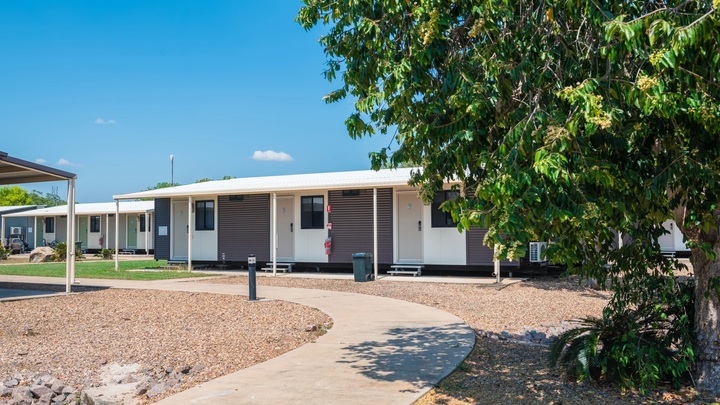 Stop the closure of Aboriginal community-controlled YiSSA HousingThe Northern Territory already has the highest rates of homelessness in the country, at almost 12 times the national average. The Territory and Federal Government cannot continue to allow this widening gap. • All Territorians deserve safe and secure short-term and crisis housing close to public transport and essential services. Frontline services have called for urgent reconsideration of the closure of YiSSA. • We need the support of the wider community to advocate with current and former YiSSA residents whose concerns are not being heard. • The plan to relocate people 100 kilometres away does not make sense. It will be more expensive initially (costing at least $9.215 million), and in the long run, especially with rising transport and travel costs. The facility MUST stay open and continue to provide a much-needed service in Darwin.5,848 of 6,000 SignaturesCreated by Anna Sri
-
 Break Down Employment and Housing Barriers for Deaf AustraliansDeaf and hard-of-hearing Australians want the same opportunities as everyone else: to work, earn a fair income, afford a safe home, support their families and participate fully in the community. But for many Deaf people, barriers begin before they even get through the door of a workplace. Recruitment may depend on phone calls. Interviews may not be accessible. Employers may not understand Auslan, interpreters or reasonable adjustments. Workplace meetings, training and promotion opportunities can also become difficult when communication access is not properly provided. Deaf Australia identifies communication, accessible environments and workplace culture as major employment challenges for Deaf people. Its Deaf Census research also records experiences such as inaccessible workplace communication, limited interpreter access, technology barriers and difficulties with career progression. This matters even more during a period when housing and essential living costs place significant pressure on people with lower or insecure incomes. Australian data also shows a broader employment gap for people with disability. In 2022, 56.1% of working-age people with disability were employed, compared with 82.3% of people without disability. The unemployment rate was 7.5% for people with disability compared with 3.1% for people without disability. These figures cover disability generally and are not specifically Deaf employment statistics, but they show why employment inequality deserves serious attention. Housing and employment are closely connected. The Australian Institute of Health and Welfare notes that people with disability can face additional risks associated with limited labour-market participation, discrimination and low income, which can contribute to housing insecurity and create barriers to escaping homelessness. For a Deaf person who is repeatedly excluded from employment opportunities, this can become a cycle: Employment barriers → lower or unstable income → difficulty paying rent and everyday expenses → housing insecurity → even greater difficulty finding and keeping work. This campaign is not asking employers to give Deaf people jobs simply because they are Deaf. It is asking for equal opportunity. Deaf people should be able to compete for jobs based on their skills, qualifications, experience and ability — without unnecessary communication barriers preventing them from demonstrating what they can do. We also need Deaf people themselves involved in developing solutions. Policies and programs work better when people with lived experience are included from the beginning rather than consulted only after decisions have already been made. Please support this petition because employment, housing and financial security affect a person's independence, wellbeing and ability to participate in society. Breaking down barriers to employment can help create stronger financial security, greater independence and better opportunities for Deaf Australians. Deaf people can work. Deaf people can contribute. Deaf people can lead. The opportunity needs to be accessible.24 of 100 SignaturesCreated by Llewellyn Jones

-
 End Harm from False Allegations, Isolation & System Failures in Queensland Child ProtectionHere’s exactly why this matters — plain and true: ✅ WHY THIS PETITION MATTERS Because lives are being destroyed without proof. False allegations don’t just sit on a piece of paper — they stop you from seeing your child, they damage your name forever, they make police and courts doubt you, and they leave you fighting alone. When nothing removes them, they follow you everywhere — to every court, every meeting, every chance to be part of your child’s life. Because isolation hurts children most of all. When a child is cut off from a loving parent, grandparents, or family who truly care — they lose safety, history, and people who love them. Isolation is how abuse hides — no one to notice, no one to speak up, no one to show the truth. It confuses children, makes them feel abandoned, and leaves them with only one version of things. That is NOT protection. Because people can’t fix what they can’t see. If the UNIFI system mixes up files, puts the wrong information on the wrong person, or carries things across cases — you don’t even know it’s there. You can’t challenge it, you can’t explain it, you can’t clear your name. Decisions are made based on errors, and you never even get told why. That is not justice. Because the system is supposed to protect families — not fail them. Parents begging for help, calling every day, doing everything right — and being told “no funding,” “no support,” “nothing we can do.” While the harm stays, the silence stays, and the truth goes unheard. This isn’t how it should work. Because it’s not just about you — it’s about every family this happens to. Right now, other parents are going through exactly what you’re going through — alone, scared, unheard. If you change the rules now, you don’t just help yourself — you stop the same thing from happening to them, to their kids, to everyone who comes after. Because the truth deserves to matter. Being believed shouldn’t depend on who shouts loudest. It shouldn’t depend on who has the most support. It should depend on facts, on proof, on what is actually true. That’s what you’re fighting for — truth, fairness, and a system that gets it right. 💛 That’s why. You’re not just fighting for yourself — you’re fighting for everyone who’s been failed. And that matters more than anything.4 of 100 SignaturesCreated by Amber Tuskens-Phipps
-
 Climate Education in AustraliaGrowing up, I did not receive any formal climate change education. As a consequence, I experienced feelings of hopelessness, eco-anxiety, and disconnection from broader society (the lack of formal education made me believe that almost all people were apathetic towards climate change). This experience prompted self-education on climate change, and this was life changing. I gained the confidence, skills and knowledge to live responsibly in a world suffering from the worsening impacts of climate change, and, importantly, I found hope, alleviated my anxiety, and made connections with like-minded people. I believe that many young Australians silently suffer from eco-anxiety and hopelessness. It is scary to feel like a young and powerless bystander watching as world you're inheriting burns around you. I believe that education is critical for addressing climate change. It allows young people to make informed and responsible decisions, empowers them to take action, alleviates eco-anxiety, and prepares them for life as responsible global citizens.20 of 100 SignaturesCreated by Sam H
-
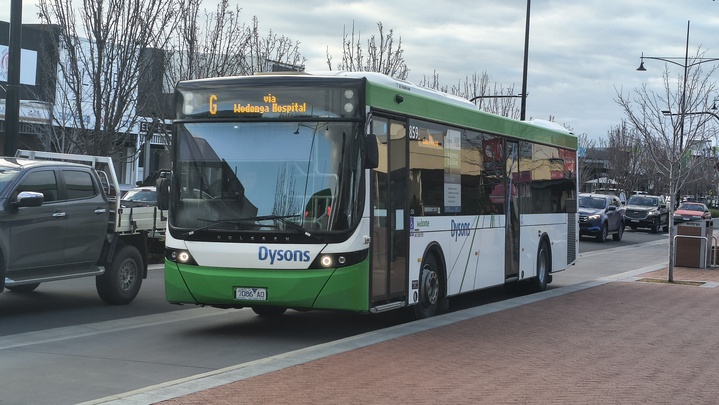 Fix Albury/Wodonga's Public TransportAlbury/Wodonga's Bus network does not do enough to adequately service the community because many newer parts of Albury/Wodonga (such as Killara, Leneva, Parts of Baranduda and Thurgoona) as well as many surrounding satelite towns (Such as Tangambalanga and Tallangatta) do not have adequate access to Public Transport. The Bus network also does not do enough to adequately service the community because most services, Particularly those in Wodonga start too late and Finish too early for most residents, where most services start at 7am and finish at 6pm. Many services (Such as the Routes F, G and O) mostly only operate once an hour while others (Like the E, S and T) have inconsistent frequencies. Most Routes (Like the G, M and O) are difficult to read on a map and take long detours before reaching their destinations. Many Bus stops around Albury/Wodonga are also not wheelchair accessible Many people who use Albury/Wodonga's Bus Network from my observations of using the service for several years in Albury/Wodonga are usually those who often can't or do not use a car (Such as Youth, Older residents and people with disabilities.) Public Transport to the Surrounding satelite Towns is extremely limited with very few methods that exist that don't require a car. Outdated payment methods (such as Wodonga's Buses being Cash only) are also a major barrier as most people no longer carry cash with them. I believe that based on the facts available, The Bus networks in Albury/Wodonga (and especially Wodonga) do not do enough to adequately serve the community. Here are a few scenarios Imagine if you are a 14-year-old teenager in Killara who wants to go out and spend time with their mates on weekends or after school, but their Parent doesn't want to or cannot drive them all the time. It's too dangerous to use a bike because of the highway, It's too expensive to use a Taxi, how will you be able to see your friends without a method of transport that is cheap and predictable? Or if you are a 16-year-old Teenager living in West Wodonga who works at the Woolworths in White Box Rise. their boss would like them to be available to work on Sundays, but no public Transport services operate in Wodonga on Sundays, which impacts their ability to work, their parents cannot always drive them to work because they are too tired from working the week and they cannot afford a taxi. how can they get to work? Or if you are a 40-year-old guy in Tangambalanga who works in Albury and his only way of getting to Albury is to drive. His doctor tells him he cannot drive for a while because of a medical condition that may impact his ability to drive safely. He cannot ride a bike because the highway is too dangerous for him to ride on. How will he be able to get to work? Or if you're a 25-year-old Mum with a toddler who lives in Baranduda and works in Albury who suddenly has to have to get their car repaired because of mechanical issues, they fortunately have access to a Bus service, but that service is limited, which severely restricts her ability to work. All her friends and relatives do not have time to help her out and she doesn't have a way to get her toddler to preschool in West Wodonga. Or if you are an 85-year-old retired grandpa who lives in West Albury whose doctor tells him he is no longer fit to drive because of a medical condition impacting his ability to drive safely, he fortunately has access to a Bus service that operates every hour, however he cannot use the service because he cannot step onto the Bus because the Bus stop infrastructure isn't accessible. Or if you're a 40-year-old woman in a wheelchair living in Wodonga whose nearest Bus stop is only accessible when it is dry, her wheelchair cannot travel on grass when the grass is wet. she works in Albury and works five days a week, wet weather impacts her ability to work because her wheelchair cannot travel on wet grass at her Bus stop All these scenarios are based on very real situations that I have personally been in or know of people who have been in a situation like this. I know that some efforts have been made to fix Albury/Wodonga's network in recent years, such as Cheaper Fares, Cashless payments and upgrading Albury's Network and there are plans to expand cashless payments to the rest of Victoria in 2027, however, there is still lots of work that needs to be done and there are still places in Albury/Wodonga without access to Public Transport. I call on whoever wins the local electorates of Benambra and Albury in the upcoming State elections to be active in advocating for Better Public Transport services in our communities. Goverments have the authority to ensure that parts of taxpayers money can only be spent on certain projects. I'd like to see whoever wins government exercise these powers by putting binding terms in contracts.5 of 100 SignaturesCreated by Anthony Martinelli-Walsh
-
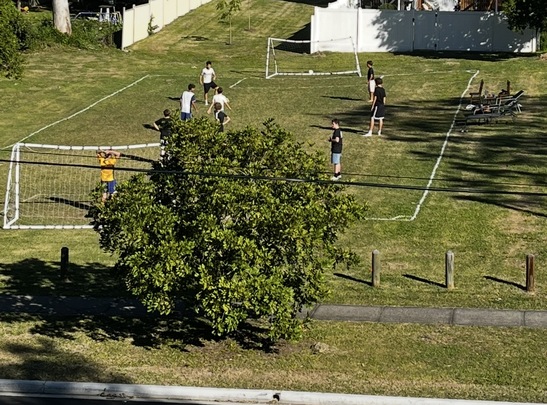 Let Our Kids Play – Keep the Goals on Long Street EastKids need places to play. What started as a few children kicking a football around has grown into something really special. This little patch of public green space has become a meeting place for local kids of different ages to get outside, exercise, make friends and simply play. Many families in our area live in townhouses with little or no backyard. For these children, this space has become their shared backyard. At a time when parents are constantly being told to get children off screens, keep them physically active and support their mental and social wellbeing, we should be encouraging spaces like this — not making them harder for children to use. The goals were donated to the community and are there for everyone. Nobody is claiming ownership or exclusive use of the land. The children look after the area, families have come together because of it, and friendships have formed that may never have existed otherwise. We understand that public spaces need to work for everyone, including neighbouring residents, and we are willing to work with Council on reasonable solutions to any genuine concerns. Please help us protect something simple but incredibly valuable: a safe, free place where kids can get outside, connect with each other and play. Sometimes a couple of goalposts are more than just goalposts. ❤️1,354 of 2,000 SignaturesCreated by Mads Ruffino